The Dirty Truth Behind Natural Gas

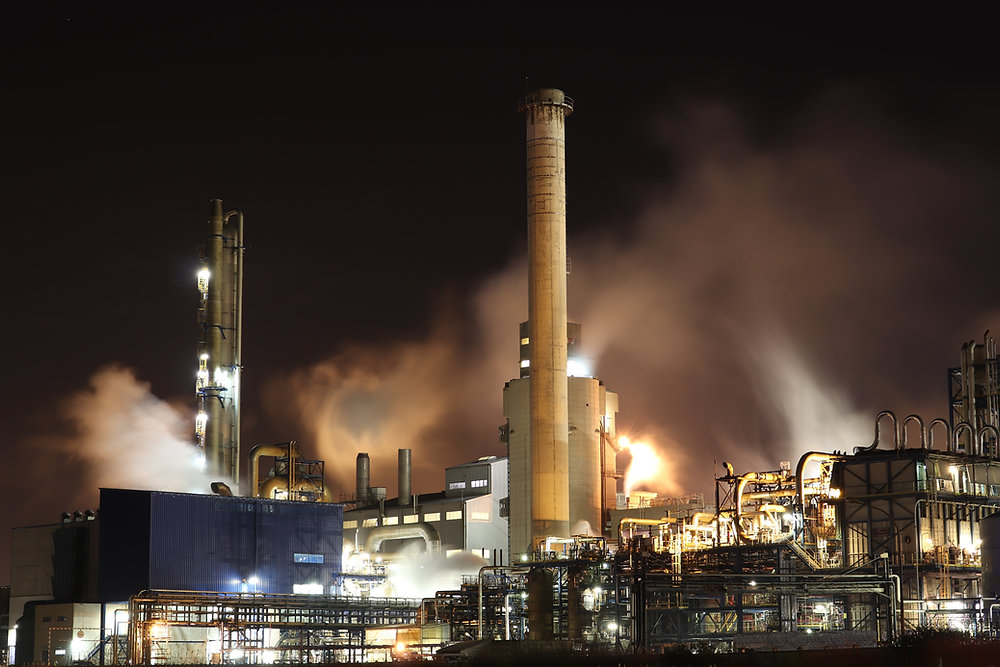
In 2015, the Environmental Protection Agency (EPA) issued a new rule concerning the handling, storage, and disposal of coal combustion residuals (CCR). These are the materials that remain after coal is burned, often referred to as “coal ash”. Following this new regulation, Big Sandy Plant, located in Lawrence County, Kentucky, stopped burning coal that same year. The plant was soon converted into a natural gas fueled facility, which meant that it was no longer producing CCR materials. In an interview conducted by The Daily Independent, an eight year employee states: “our goal here in doing this is to make a reliable grid to power our neighbor’s homes. With the plant still in Lawrence County, it provides jobs, it provides a tax base. It’s a big help for the community”. However, are natural gas fueled power plants a “big help” for our planet?
In the United States, over 500 coal-fired plants have closed since the year 2010. In many cases these plants are replaced by natural gas plants, just like Big Sandy. These natural gas powered plants now produce almost forty-percent of the United State’s energy needs. It is important to remember that natural gas is made up primarily of methane gas, which burns much more efficiently than coal, making it a better option in many cases. In addition to this, natural gas has been proven to be the “most environmentally friendly fossil fuel” because it burns cleaner. Power plants that burn natural gas emit around fifty-percent less carbon dioxide than regular oil or coal-fired power plants. However, natural gas is a much dirtier energy source than we previously thought.
Previously, ten-percent of the methane in the atmosphere was thought to have come from geologic sources such as volcanic seeps and gassy mud pots, but new research published in Nature proves otherwise. It is now suggested that natural geologic sources make up a much smaller fraction of the methane in today’s atmosphere – the methane sitting in our atmosphere is most likely attributable to the fossil fuel industry. We have underestimated the methane impacts of fossil fuel extraction by nearly forty-percent. Because of the admirable qualities that natural gas holds to the power plant industry, it is often referred to as a “bridge fuel” – that is, a fuel used to help smooth the transition to a “carbon-neutral energy future”. However, as Sheila Olmstead, an environmental economist at the University of Texas at Austin, puts it in an article for National Geographic, “the question is: is this a bridge fuel, or is it going to be around for a very long time? The market is telling us it’s probably going to be around for a long time”.
The climate goal of keeping air temperatures from soaring 3.6 degrees Fahrenheit was made at the 2015 Paris Climate Agreement (COP21). “It’s impossible to hit those climate targets with methane in the mix,” says Lena Isaksson, a greenhouse gas expert at Austria’s International Institute for Applied System Analysis, for the same National Geographic article. Burning natural gas emits carbon monoxide, nitrogen oxides, and sulfur dioxides into the atmosphere – all of which contribute to global warming. Natural gas may be a “more environmentally friendly fossil fuel”, but it is not the solution to the global warming problem.
Oil and gas operations have most likely had a bigger impact on methane emissions than previously known. However, this discovery may be a good thing after all – the more methane emissions that can be identified as the result of human activity, the more control it means policy makers, businesses, and regulators have to fix the problem. These operations and industries also have the ability to clean up their emissions by reducing the amount of natural gas they use and by making efforts to clean up any leakes, flares, and other wasted gas from the process. Although natural gas is the “most environmentally-friendly fossil fuel”, every fossil fuel extraction is bad for the environment and will lead to long-lasting detrimental consequences in the future.
Citations
. “Natural gas environmental impact: problems and benefits” MET. https://group.met.com/en/mind-the-fyouture/mindthefyouture/natural-gas-environmental-impact
2. “Natural gas is a much ‘dirtier’ energy source than we thought” National Geographic. https://www.nationalgeographic.com/science/article/super-potent-methane-in-atmosphere-oil-gas-drilling-ice-cores
3. “Natural gas explained” U.S. Energy Information Administration (EIA). https://www.eia.gov/energyexplained/natural-gas/natural-gas-and-the-environment.php
4. “The rivers that ‘breathe’ greenhouse gases” BBC Future. https://www.bbc.com/future/article/20210323-climate-change-the-rivers-that-breathe-greenhouse-gases
5. “Natural Gas” National Geographic. https://www.nationalgeographic.org/encyclopedia/natural-gas/
6. “Groundwater Quality in Watersheds of the Big Sandy River, Little Sandy River, and Tygarts Creek” The Kentucky Geologic Survey & the Kentucky Division of Water. https://kgs.uky.edu/kgsweb/olops/pub/kgs/water/RI19_12/RI19intro.pdf
7. “Big Sandy Plant” American Electric Power. https://www.aep.com/environment/ccr/BigSandy
8. “Big Sandy Power Plant natural gas conversion complete” The Daily Independent. https://www.dailyindependent.com/news/big-sandy-power-plant-natural-gas-conversion-complete/article_a486f08c-3c7e-11e6-9807-3f4804956319.html
9. “Preindustrial 14CH4 indicates greater anthropogenic fossil CH4 emissions” Nature. https://www.nature.com/articles/s41586-020-1991-8
10. “Cleaner Power Plants” Environmental Protection Agency (EPA). https://www.epa.gov/mats/cleaner-power-plants
11. “The Paris Agreement” United Nations Climate Change. https://unfccc.int/process-and-meetings/the-paris-agreement/the-paris-agreement