A Closer Look at India’s Monsoons

In August of 2018, India’s annual monsoon season wreaked havoc in Kerala. In this urban city, the startling 12 inches of rain that accumulated in less than 24 hours provoked a flood that led to severe damages: the demolition of 23,000 homes and countless natural habitats, the destruction of 2.24 million acres of crops, and the deaths of a plethora of living beings. Recorded as the worst flood that Kerala experienced in almost a century, experts are convinced that global warming played a major role in exacerbating the monsoon’s conditions. Due to an increased prevalence of water vapor in the atmosphere as a result of higher surface temperatures, there are a lesser quantity of “‘storms, but when they do come, [they tend] to produce higher’” amounts of rainfall at more intense rates. This directly affects monsoons as well, making them more extreme despite their increased rarity.
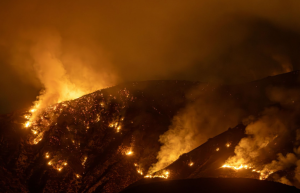
Moreover, extreme monsoons come with their inevitable consequences–floods. Essentially, because of intense precipitation, over-saturated soil isn’t able to soak in all of the water. Not only does this lead to runoff, but also an increased likelihood of floods and landslides. On the other hand, due to the fact that there is a less frequent occurrence of precipitation overall, there is “a greater danger for wildfires to happen” due to the accumulation of dry soil. This, in turn, becomes a vicious cycle because wildfires remove the absorbent layers of soil and make landscapes more prone to floods when there is severe rainfall. Although wildfires weren’t a factor that contributed to the flooding of Kerala in 2018, many rich and biodiverse habitats that would have been able to prevent severe flooding were decimated by mass urbanization.
If humans continue to prompt the escalation of global warming, there will be more drastic monsoon seasons and thus a higher prevalence of floods. According to research conducted by Columbia University, “monsoon rainfalls will likely increase by about 5%” for “every degree Celsius of warming.” Not only does this indicate a direct danger to natural ecosystems and countless living beings, but it could serve as a major setback for economically developing countries like India who are dependent on crops that can be destroyed due to severe storms like these.
Citations
1)“How Climate Change is Impacting out Monsoon” ABC 15 Arizona https://www.abc15.com/weather/impact-earth/impact-earth-how-climate-change-is-impacting-ourmonsoon
2) “Fire’s Effects on Soil Moitsure, Runoff” Phys.Org https://phys.org/news/2018-12-effectssoilmoisturerunoff.html#:~:text=Wildfire%20can%20make%20the%20soil%20more%20vulnerable%20to,duff%2C%20can%20store%20more%20moisture%20than%20soil%20can
3) “Climate Change is Making Monsoon Seasons More Chaotic” Columbia, Climate School https://news.climate.columbia.edu/2021/04/14/climate-change-indian-monsoon/