The Reality of Sharks
By Rylee Dudley
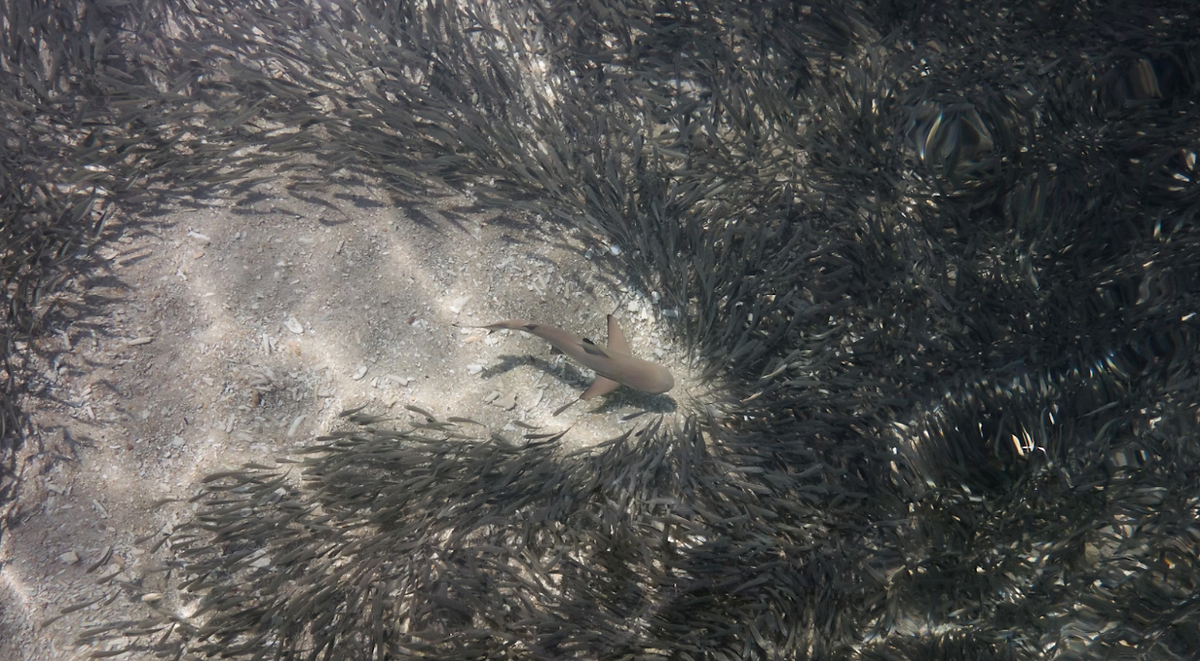
Do you ever get that feeling that something is lurking around you? Especially in the ocean? That primal and uncomfortable feeling is not uncommon. In fact, it’s deeply ingrained into much of modern society. Movies, media, and even folklore have emphasized the danger lurking beneath the waves.
Let’s put those fears aside and learn the true nature of the ocean’s apex predators.
Sharks have, unfortunately, been given a bad reputation in recent times. The 1975 film Jaws ignited a fear frenzy for sharks, and in particular, the Great White (Carcharodon carcharias). Since then, sharks have suffered from inaccurate representation. Instead of being seen as vital members of our oceans, sharks have been portrayed as mindless killing machines. Jaws sparked an irrational fear in many people that was unfortunately passed down through future generations. This portrayal couldn’t be further from the truth.
So, what is true about sharks? Yes, sharks can be intimidating and even be one’s greatest fear. No, sharks don’t purposefully go after humans as a food source. In fact, sharks never crave humans. The truth is that they are not the bloodthirsty predators that movies have made them out to be, and it’s time to take a fresh look at these incredible creatures.
It’s psychologically understandable to be afraid of these animals. Fear, after all, is a survival mechanism that all animals possess. Humans, in particular, have long feared the unknown, and what is unknown is much of the ocean. Our ocean is vast, deep, and mostly unexplored. It’s also home to sharks, whose toothy grins make for easy symbols of danger. They seem to embody everything we fear about the deep sea–its vastness, unpredictability, and potential threats.
However, in reality, sharks are just like any other animal trying to survive in a harsh world. Most species are not the man-eating monsters they are often made out to be. In fact, sharks are crucial to the health of marine ecosystems. Without them, the balance of our oceans would be in great peril.
Let’s address the elephant in the room: shark attacks and encounters. While these events are sensationalized by the media, they are extremely rare. The number of shark attacks on humans each year is far less than most think. According to the International Shark Attack File (ISAF), there are an average of 10 shark attacks per year worldwide. In 2024, only 4 people were killed globally by shark attacks (Naylor, 2024). That number is dwarfed by other risks we face every day. You are more likely to be killed by a coconut falling on your head than by a shark. (Hold your pina coladas!)
Here’s another surprising fact: many shark species aren’t even capable of inflicting harm on humans, let alone motivated to do so. In the extremely rare instances of attacks, sharks often take a “test bite” to see if a human is their usual prey (like seals). Upon realizing the mistake, they usually swim away, leaving the human with minor injuries or none at all.
To put things in perspective:
Humans are responsible for the average of 274,000 shark deaths every day. That’s roughly 100 million sharks a year (Worm et al., 2024). Again, sharks take the lives of fewer than 10 people annually.
So, who’s the real predator here?
To better understand sharks, let’s look at the role of sharks in marine ecosystems.
Sharks are apex predators. That means they sit at the top of the food chain and help maintain balance in the ocean. By controlling populations of fish and other marine life, they prevent overgrazing of seagrass beds and coral reefs. Without sharks, ecosystems become unstable, and that impacts everything, including fisheries and even climate systems.
Here’s what sharks contribute to the health of the ocean:
Regulation of species populations (keeping prey species from exploding in number): Sharks help control populations of fish and other marine creatures, preventing any one species from becoming too dominant.
Maintaining biodiversity: By keeping prey species in check, sharks allow a wide variety of other marine animals to thrive, promoting a diverse ecosystem.
Promoting healthy coral reefs and seagrass beds: Sharks help maintain the balance of life in these critical ecosystems, which provide food and shelter to countless other species.
Supporting ecotourism industries around the world: In many countries, shark diving and ecotours have become a major source of income for local communities. The presence of sharks can benefit economies while also promoting the preservation of marine environments.
Now that you know how valuable sharks are, let’s introduce a few shark species that challenge the scary stereotype.
Whale Shark – The largest fish in the sea, reaching up to 40 feet in length. Completely harmless to humans; they feed on plankton.
Nurse Shark – Calm bottom-dwellers that rarely bite unless provoked.
Leopard Shark – Sleek, spotted, and commonly found in shallow waters. Not aggressive at all.
Hammerhead Shark – Known for their distinctive heads and keen sense of smell. They tend to avoid humans altogether.
Even the infamous Great White Shark is not the indiscriminate killer it’s made out to be. These sharks are intelligent, curious, and vital to ocean health.
Sharks are in danger—and not because of human fear, but because of human exploitation. The demand for shark fins (particularly in shark fin soup), overfishing, and habitat destruction have led many species to the brink of extinction.
Here are some sobering facts:
Overfishing has caused certain shark populations to decline by more than 90% in the last 50 years.
Shark finning (removing fins and discarding the rest of the body) is still practiced in many parts of the world.
Plastic pollution, ocean warming, and habitat loss are further threatening shark populations.
If these trends continue, we risk losing not just individual species but the vital roles they play in ocean ecosystems. But fear not. You don’t need to be a marine biologist to help sharks. Here are simple actions that can make a difference:
Avoid products containing shark (such as supplements made with shark cartilage or liver oil).
Support sustainable seafood and avoid companies involved in unsustainable fishing. When on vacation, support ethical tourism practices.
Educate others and share the truth about sharks.
Support ocean conservation organizations like Shark Trust, WildAid, and IFAW.
Say no to shark fin soup and encourage others to do the same.
Even choosing reef-safe sunscreen or reducing your plastic use can positively impact the marine environment.
The idea of something lurking in the ocean can be terrifying, yes, but that fear often stems from misunderstanding. Sharks are not monsters. They’re majestic, ancient creatures that have roamed the oceans for over 400 million years, long before dinosaurs. If anything, they should be afraid of us.
The next time you find yourself in the ocean, instead of fearing the creatures beneath the waves, remember that sharks are not out to get you. They’re just like us: simply going about their day while striving to maintain balance in life. By changing the narrative and embracing a more informed perspective, we can protect these vital animals and the oceans they inhabit. When we learn to embrace sharks, the entire world sees the benefits.
Let’s give sharks the respect they deserve. After all, respecting sharks isn’t just about saving them—it’s about saving the planet.
Citations
Carrier, J. (2019). Shark – Shark behaviour | Britannica. In Encyclopædia Britannica. https://www.britannica.com/animal/shark/Shark-behaviour
Florida Museum. (2019b). International Shark Attack File. Florida Museum. https://www.floridamuseum.ufl.edu/shark-attacks/
Gray, R. (2019, August 8). The real reasons why sharks attack humans. Www.bbc.com. https://www.bbc.com/future/article/20190808-why-do-sharks-attack-humans
Heithaus, M. (2024, August 18). Oceans without sharks would be far less healthy – new research. FIU News; Florida International University. https://news.fiu.edu/2024/oceans-without-sharks-would-be-far-less-healthy-new-research
ifaw. (2024, June 20). FAQ about sharks. IFAW. https://www.ifaw.org/journal/faq-about-sharks
IUCN. (2019). International Union for Conservation of Nature – IUCN. IUCN. https://www.iucn.org