Reduce, Reuse, Repair, Recycle: The 4 Simple Steps to Reduce Your Ecological Footprint
Carli Ciavarelli
In a society that is privy to overconsumption, our planet is facing a major waste epidemic. Much of it comes down to how we dispose of our everyday items. Allow me to introduce the term ecological footprint. The Oxford English Dictionary defines ecological footprint as “a measure of the human impact on the environment, expressed as the amount of land required to sustain their use of natural resources. In simpler terms, it describes how dependent we humans are on natural resources and ecosystem services (water, energy, land, etc.). It also measures the amount of these things that are required to sustain our way of life, and the waste and pollution that is generated in the process.
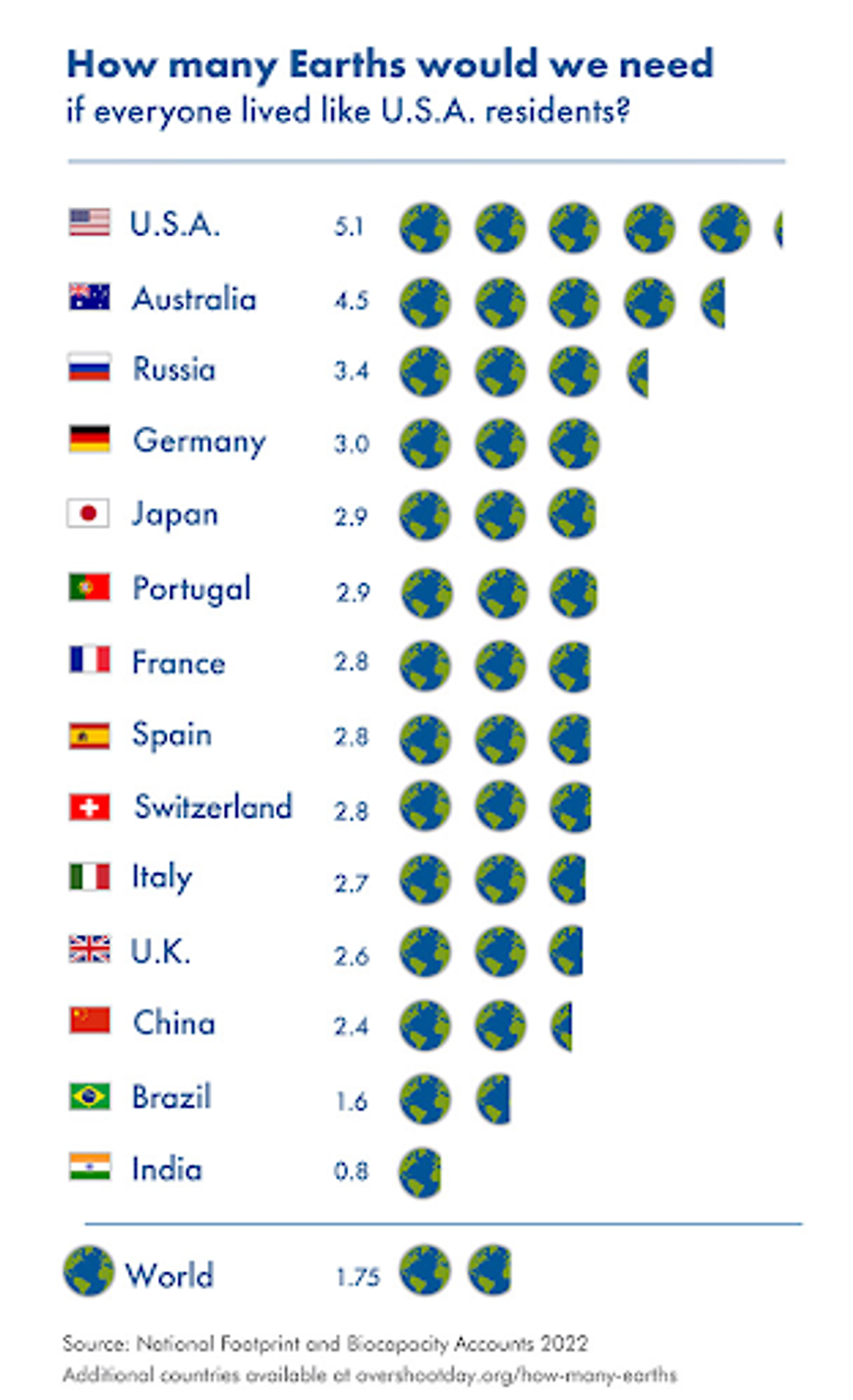
In 2018, the average American’s ecological footprint was about 8.1 global hectares per person (gha), but the global biocapacity– that is, the ability of the Earth’s ecosystems to produce resources and absorb waste– was about 1.6 gha. This means we would need about 5 Earths if everyone on the planet lived like Americans. We need to be conscious about our overconsumption because if the global population’s ecological footprint exceeds the Earth’s ability to regenerate, natural resources will be depleted and environmental degradation will occur.
The key to making a positive impact is to reduce your ecological footprint by following the 4 Rs: Reduce, Reuse, Repair, Recycle! These necessary, simple steps will help to conserve energy, reduce waste, and support a more sustainable lifestyle:
Reduce: Sometimes less is more.
The best way to reduce waste is to avoid creating it in the first place! This means we need to be mindful about what we buy and how we use our resources.
Avoid single-use plastics like plastic straws, bags, and water bottles
Buy fewer disposable items: opt for durable, longer-lasting alternatives such as reusable bags or glass food containers instead of plastic.
Conserve water and energy by taking shorter showers, turning off the tap when brushing your teeth, and only running full loads of laundry and dishes.
Think before you buy: Do you really need this item? Do you have something similar at home already?
Reuse: Give items a new life.
Reusing is about making the most of what you already have!
Carry reusable bags, water bottles, and coffee cups.
Donate clothes and household items that you no longer want instead of throwing them out
Repurpose items– use that mason jar you have lying around as a flower vase, or for those overnight oats you’ve been dying to make!
Repair: Don’t toss, fix!
In a culture where we are constantly throwing things away, repairing is an act of resistance.
Instead of discarding electronics, clothes, or appliances, check if they can be repaired.
Mend broken items yourself before deciding to toss them– fixing your furniture or sewing that hole in your shirt can extend the life of your items significantly.
Support local repair shops– if you can’t fix it yourself, someone else might be able to!
Recycle: Do it correctly.
When something can’t be reused or repaired, recycling is the next best thing, but it has to be done responsibly.
Properly separate your recyclables– paper, glass, metal, and plastic.
Learn about your local recycling rules to avoid contamination. [insert quote about how everything gets contaminated just from one wrong item being in the recycling bin]
Avoid wish cycling– not everything you think is recyclable actually is!
Other thoughts: Sustainable choices in Fashion and Transportation
Buying things second-hand saves so many resources! A single pair of jeans requires about 1,800 gallons of water to produce, and one cotton shirt requires about 400 gallons. As tempting as it can be sometimes, avoid the big fast fashion beasts like Shein and Amazon that thrive on the overconsumption of people. Try supporting ethical, sustainable brands, thrift stores, or shopping at small local businesses instead!
Carpooling, public transport, and biking can drastically cut down on carbon emissions that are contributing to climate change.
Remember, every action counts! Living sustainably doesn’t mean being perfect– it’s just about making better choices when you can. Every small change adds up to a large impact! Ready to make a difference? Whether it’s ditching plastic straws, taking a shorter shower, or buying from the thrift store, pick one action today and commit to it. Every step matters! Click this link here to calculate your own ecological footprint. It will tell you what you are doing well and what steps you can take to reduce it!
Let’s Reduce, Reuse, Repair, and Recycle– the Earth will thank us later!
Citations
“How many Earths? How many countries? – Earth Overshoot Day.” Earth Overshoot Day, https://overshoot.footprintnetwork.org/how-many-earths-or-countries-do-we-need/. Accessed 7 March 2025.
Merchant, Brian. “How Many Gallons of Water Does It Take to Make . . .” Treehugger, 11 Oct. 2018, www.treehugger.com/how-many-gallons-of-water-does-it-take-to-make-4858491.
“What Is ‘Wishcycling’ and Why Is It a Problem for the Circular Economy?” World Economic Forum, 24 Nov. 2021, www.weforum.org/stories/2021/11/what-is-wishcycling-circular-economy. Accessed 10 Mar. 2025.